
Are Virtual Phone Numbers Safe? What They Can and Cannot Do
Privacy · October 16, 2026 · 4 min read
Whether a virtual number is safe depends on what you use it for. For a one-off signup, it can be a safer choice than giving out your own number. For an account that holds money or that you must recover later, it can be a bad idea.
This article describes what a virtual number can and cannot do, so you can decide for yourself.
What a virtual number is
A virtual number is a phone number that is not tied to a SIM card in your hand. It receives texts through a service and shows them to you online. Some also take calls. They are used for verification codes, business lines and testing.
Where they help
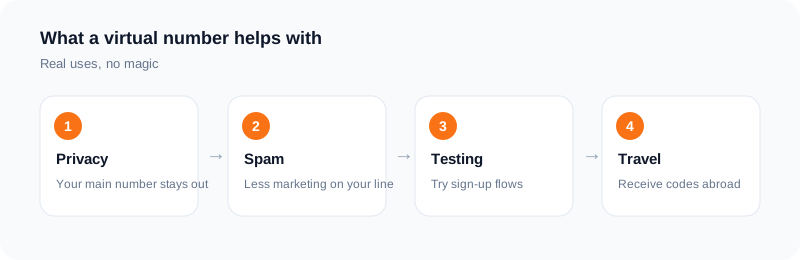
The biggest benefit is privacy. If you use a separate number for a signup, your main number never enters that company's records. If that company later loses data, your personal number is not in it.
They also cut the marketing texts that follow a signup, help developers test sign-up flows, and let you receive a code when your own SIM cannot, for example when travelling.
Where the risks are
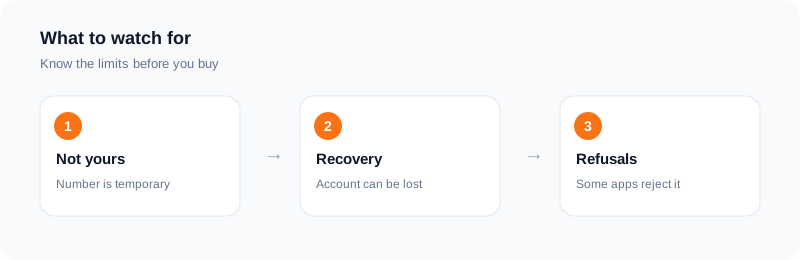
The main risk is losing access. A rented number is temporary. If an account depends on it for recovery, you can be locked out when it expires. The second risk is refusal: some services do not accept virtual numbers, and the rules change.
There is also the question of who runs the service. Choose a provider with clear billing and refund rules, and read them before you pay.
Is it legal?
Rules differ by country and by service. Using a number to receive your own verification code is common and, in most places, ordinary. Using numbers to cheat a service, to evade a ban, or to run fake accounts is against the rules of those services, and may break the law. We do not support it. Check the rules where you live and follow each service's terms.
How to use one safely
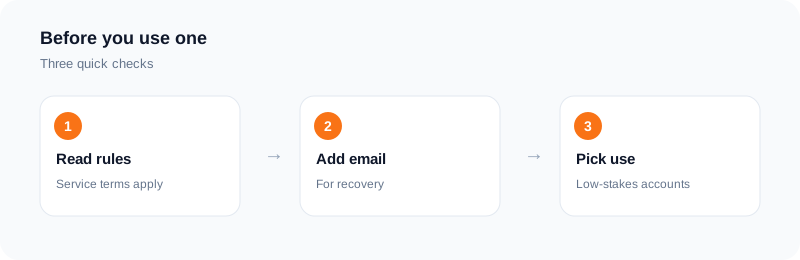
Use it for low-stakes accounts. Add a recovery email. Do not reuse a rented number for banking or payments. Never share the code you receive with anyone who contacts you. Choose a provider whose refund rules you understand. With SMS Activate, for example, a standard activation with no SMS inside 20 minutes is refunded to your wallet.
When to choose something else
If you need a number for years, use a real SIM or eSIM. If you need calls, use a calling plan or app. A virtual number for codes is a tool for short tasks.
Questions to ask any provider
Whether a service is safe depends on how it behaves, so ask a few plain questions. Does it say clearly when you are charged and what happens when nothing arrives? Does it explain who can see the messages that come in? Does it list what it cannot do, such as keeping a number for an account you want long term?
Look at the page that explains refunds and cancellation. A provider that is vague about money is a poor choice, even if the price is low. Look for contact details and a way to ask a question before you pay.
If a provider promises that every account will work with every app, treat that as a warning. No honest service can promise that.
Protecting yourself while you use one
Never share information you would not give to a stranger. A code sent to a virtual number may be visible to the service that holds the number, so do not use one for accounts that hold money or private records.
Use strong, unique passwords, and add a recovery email you control as soon as an account is created. If the account matters, move it to a number you keep.
Keep your wallet funded only as far as you need it, and keep your own note of each order so every charge matches something you placed.
Signs of a poor service
Prices that are unclear until the final step. No refund rules. Claims of a one hundred percent success rate. No way to reach anyone. Pressure to pay quickly. If you see several of these together, leave.
A short safety checklist
Use it for low-risk accounts and one-time codes. Do not use it for banking or anything that holds money. Add a recovery email to every account you create with it. Read the refund and cancellation rules before you pay.
Do not reuse the same number across many accounts on the assumption it will always work. Keep your main number for what must stay private. If an account becomes important, move it to a number you keep.
Look at the whole picture, not only the number. A strong password, two-step sign-in and a careful eye on messages protect you more than the number type does.
Frequently asked questions
Are virtual numbers anonymous?
Not completely. They keep your own number out of the signup, but they do not hide everything about you.
Can I lose my account?
Yes, if the account depends on the rented number for recovery. Add a recovery email.
Will all apps accept them?
No. Each service decides.
Do refunds exist?
With SMS Activate, a standard activation with no SMS in 20 minutes is refunded to your wallet.
Can I use a virtual number for my bank?
It is not a good idea. A bank needs a number you control for the long term. Use your own SIM for anything that holds money.
Are my messages private on a virtual number?
Assume the provider can see messages sent to its numbers. Use them only for low-risk accounts and one-time codes.
Ready to try it?
Rent a number and receive your verification code in under a minute.
Open the dashboardKeep reading
Related services
 Telegram verificationCreate a Telegram account without exposing your personal phone number.
 WhatsApp verificationVerify WhatsApp with a private second number instead of your everyday SIM.
 Google / Gmail / YouTube verificationVerify a new Google account, Gmail address, or YouTube channel without your main number.